
Stage 1 vs Stage 2 Compression Garments After Liposuction: What Changes?
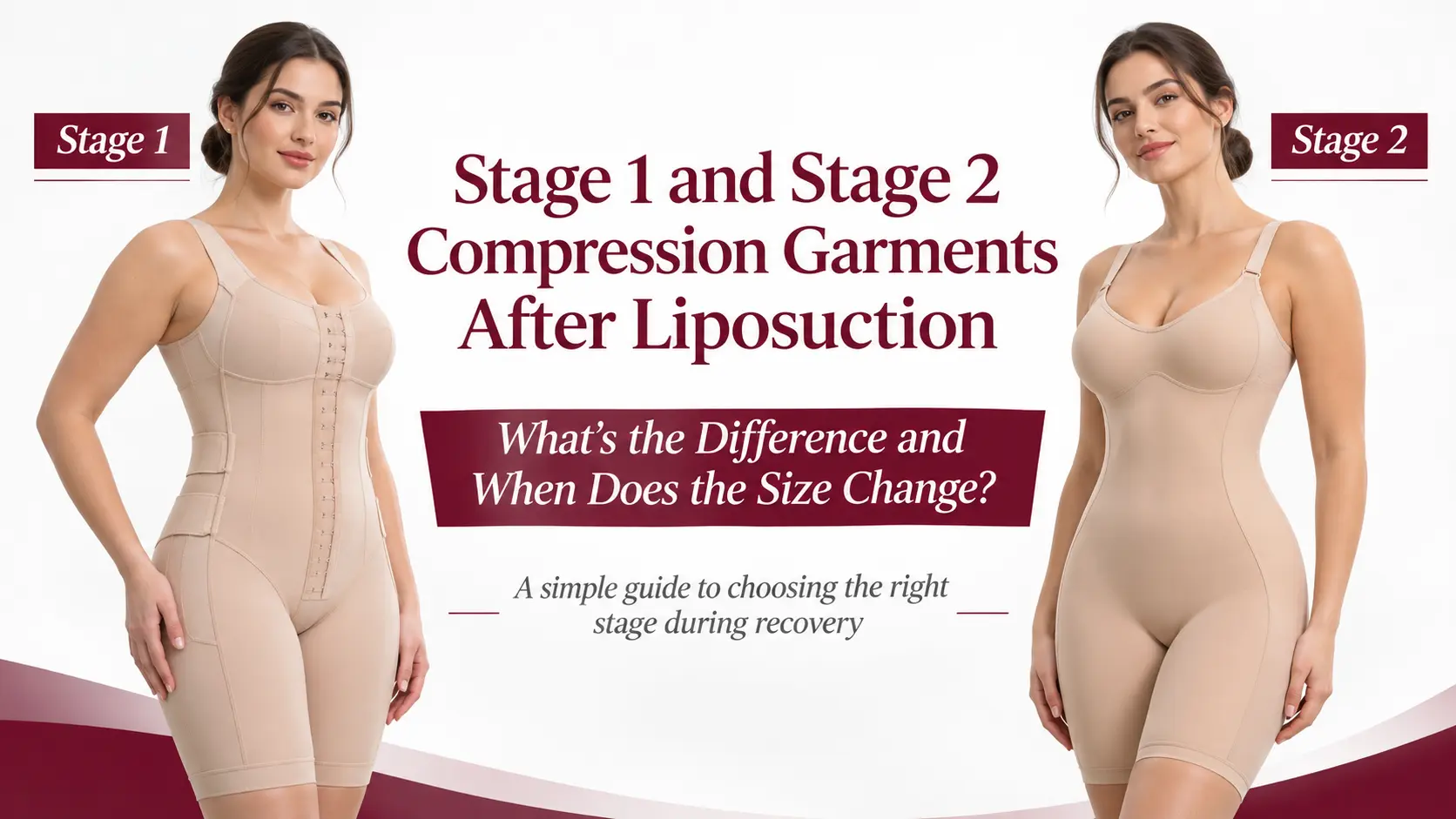
Stage 1 vs Stage 2 Compression Garments: What Do These Terms Mean?
Many shoppers search for “Stage 1” and “Stage 2” garments after liposuction. These terms are not standardized across every surgeon or compression-garment brand. Some clinics use them to describe different recovery periods or different compression approaches, while a product brand may identify garments by model, coverage and measurements without using a Stage 1/Stage 2 label.
Why Can Garment Size Change During Recovery?
Body measurements can change as swelling changes over time. A garment that fit well initially may later feel less secure. That does not mean you should automatically buy the next smaller size. Re-measure your body, check the exact product chart and follow clinician guidance.
Early Recovery: Prioritize Appropriate Coverage and Practical Fit
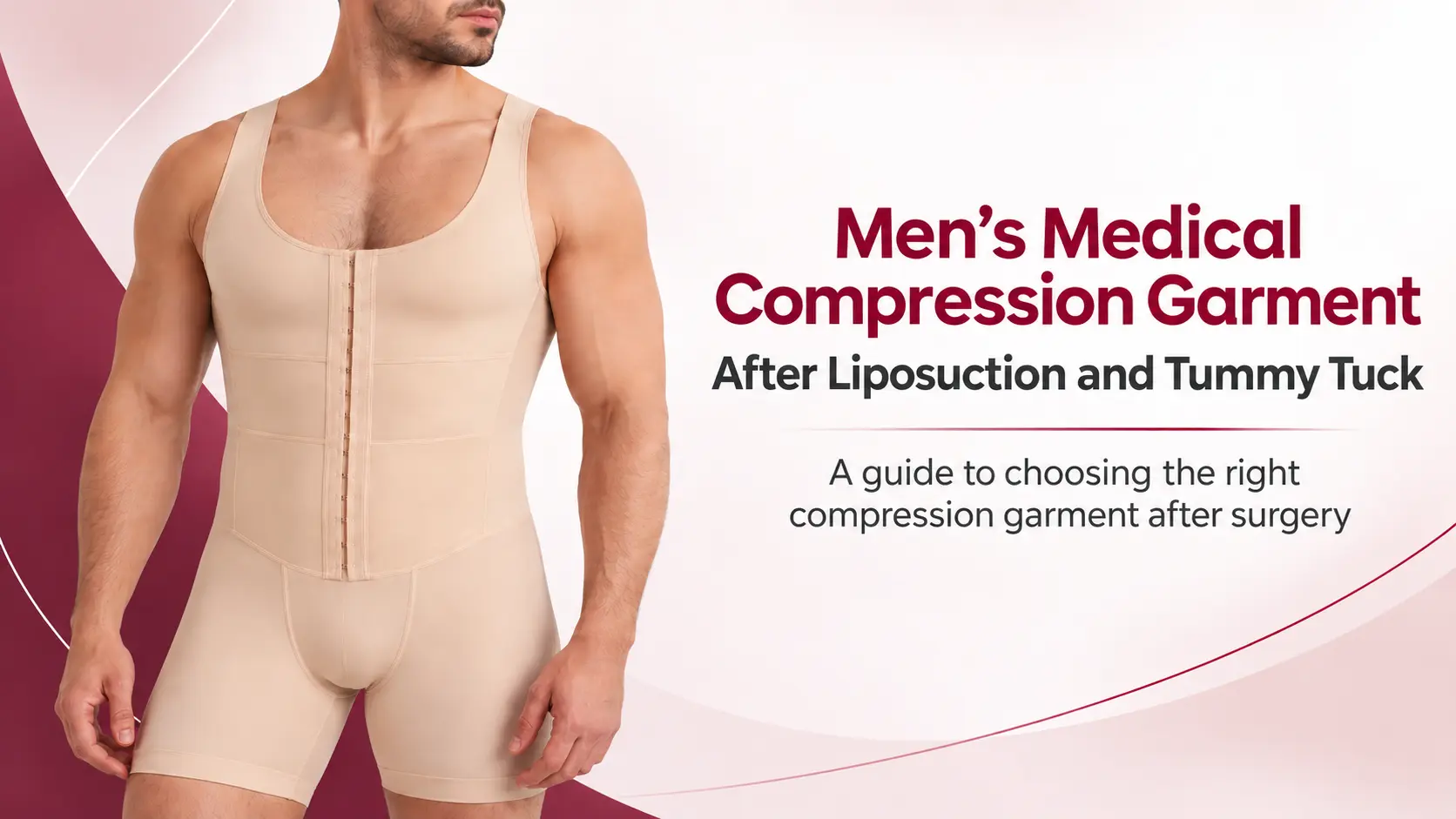
During the early period, the surgeon usually determines the appropriate garment and wear plan. Easy closures and practical construction may matter when the body is sensitive. Some Revée garments use multiple hook rows or Easy Slide fabric to make dressing more manageable. Do not choose an excessively tight garment simply because it feels “stronger.”
Later Recovery: Do You Need a Different Garment?
Not everyone needs a new garment type. Some people may continue with the same model if it still fits correctly; others may be advised to re-measure or change coverage. The decision should be based on current measurements and treated areas rather than a fixed calendar date alone.
When Should You Re-Measure?
- The garment starts shifting or bunching easily.
- Visible gaps appear in areas that used to fit securely.
- Waist or hip measurements have changed noticeably.
- The garment becomes unusually uncomfortable or creates abnormal pressure marks.
- Your clinician asks you to review fit or coverage.
Do Not Automatically Size Down
A common mistake is assuming that “Stage 2” always means buying a smaller size. Re-measure first. Use our compression garment sizing guide and check the chart for the exact model.
Should Garment Length Change?
Garment length is primarily linked to the treated areas. There is no automatic reason to move from above-knee to below-knee or full-leg coverage unless the required coverage changes. See our garment length comparison.
What About Foam?
Foam is not automatically tied to a particular “stage.” Its use depends on the procedure, target area and clinician instructions. Review our PAD01 vs PAD02 vs PAD03 guide and the general post-liposuction foam guide.
Frequently Asked Questions
Is there a fixed time to move from Stage 1 to Stage 2?
No. The terminology itself varies, and timing depends on the procedure and clinician plan.
Does Stage 2 always mean stronger compression?
No. Do not automatically choose stronger compression or a smaller size.
Can the same garment be used through recovery?
Sometimes, if coverage and fit remain appropriate. Other situations may require re-measuring or changing models.
Conclusion
Do not treat Stage 1 and Stage 2 as universal product categories. Focus on current measurements, correct coverage, comfort and your surgeon’s instructions. Re-measure when your body changes instead of automatically sizing down.
Browse body compression garments
Note: This is general information. Compression plans and garment changes vary by procedure, patient and clinician instructions.