

Compression Garment After 360 Liposuction: Choosing Abdomen, Flank and Back Coverage
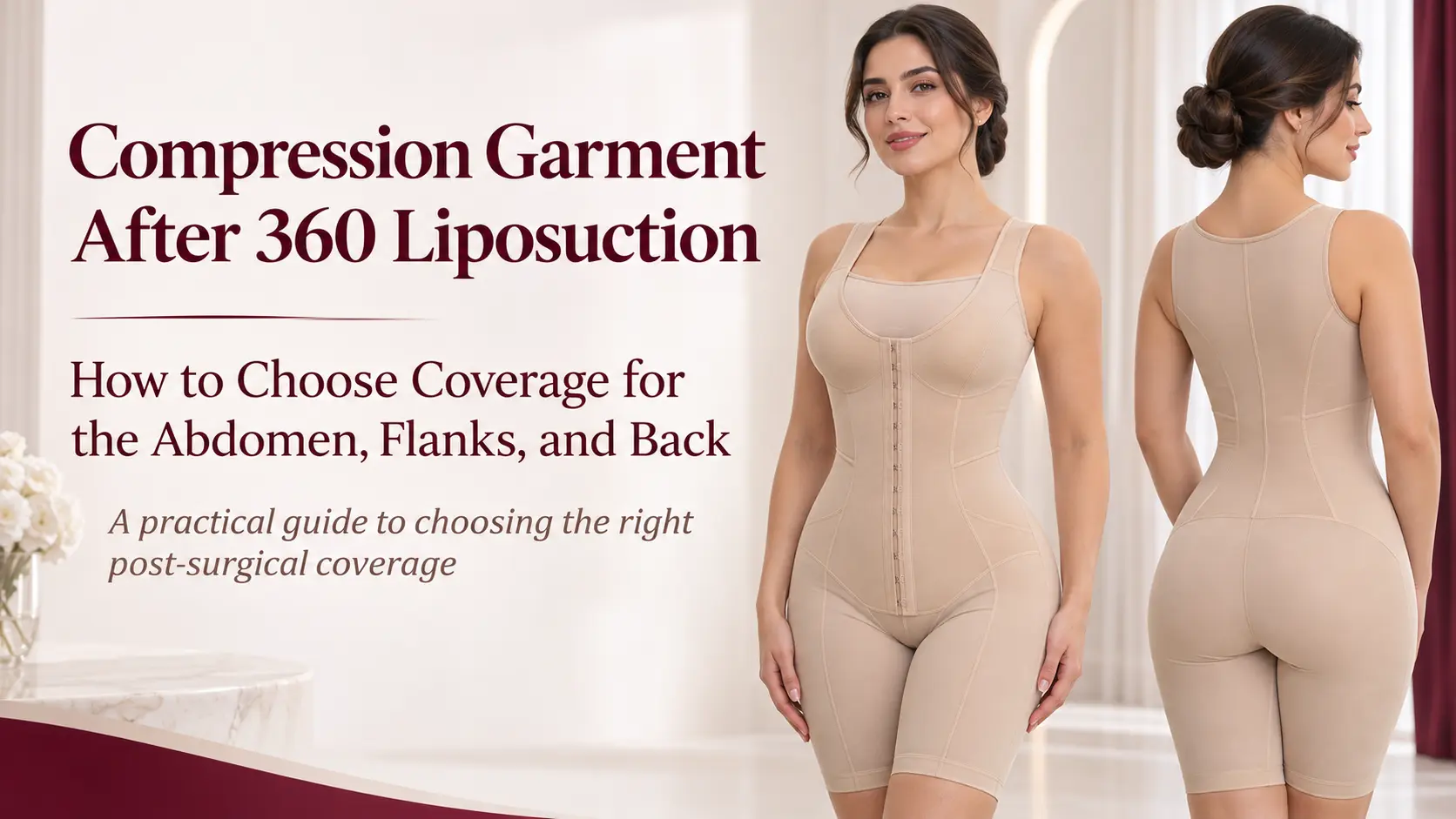
Compression Garment After 360 Liposuction: Why Coverage Varies
The term “360 liposuction” is commonly used for procedures treating several areas around the torso, such as the abdomen, flanks and parts of the back. The exact treatment map is not identical for every patient. Some procedures may also include the thighs or upper back, while others focus only on the abdomen, flanks and lower back. For that reason, choosing a garment should start with the areas actually treated and your surgeon’s instructions rather than the phrase “360 garment” alone.
Start With the Procedure Map
Before ordering, list the areas included in your procedure: abdomen, flanks, lower back, upper back, hips or thighs. Broader procedures may require broader garment coverage.
- Abdomen and back: compare REV.1352.
- Abdomen, thighs and upper back: review REV.0404.
- Below-knee coverage: compare REV.0405.
- Full-leg coverage: review REV.0406 when that length matches the treated areas and clinician guidance.
When Do the Thighs Need Coverage?
If liposuction includes the thighs or areas close to the hips, a torso-only garment may not cover the full treated region. If the thighs were not treated, choosing a longer garment simply because the procedure is called “360” may add unnecessary coverage. Match garment boundaries to the actual procedure.
Choosing Leg Length
When your clinician recommends leg coverage, choose the length according to the treated areas. Our guide on above-knee, below-knee and full-leg compression garments explains the differences.
Fit Matters More Than “Extra Tight”
Do not automatically size down to create stronger compression. A post-surgical garment should provide support without abnormal pain, breathing difficulty or severe restriction. Check the size chart for the exact product and review our compression garment sizing guide.
Checklist Before Ordering
- Confirm every treated area with your surgeon.
- Match abdomen and back coverage to the procedure.
- If the thighs were treated, compare garment lengths carefully.
- Review closure type and practical daily use.
- Use the product measurement chart rather than everyday clothing size.
- Do not change to a smaller size or different garment without a clear reason or appropriate guidance.
Frequently Asked Questions
Is one garment suitable for every 360 liposuction procedure?
No. “360” does not mean every procedure treats the exact same areas.
Is abdomen-and-back coverage enough?
It may be when those are the only treated areas. Thigh or upper-back treatment may require broader coverage.
Is the longest garment always better?
No. The appropriate length is the one that matches the treated region and clinical instructions.
Conclusion
Choose a 360 liposuction compression garment by comparing actual coverage, not by the procedure label alone. Review REV.1352, REV.0404 and the longer REV.0405/REV.0406 options, then select size using the product chart and your surgeon’s instructions.
Browse body compression garments
Note: This information is general and does not replace your surgeon’s instructions. Garment type, compression and wear duration vary by procedure and patient.